
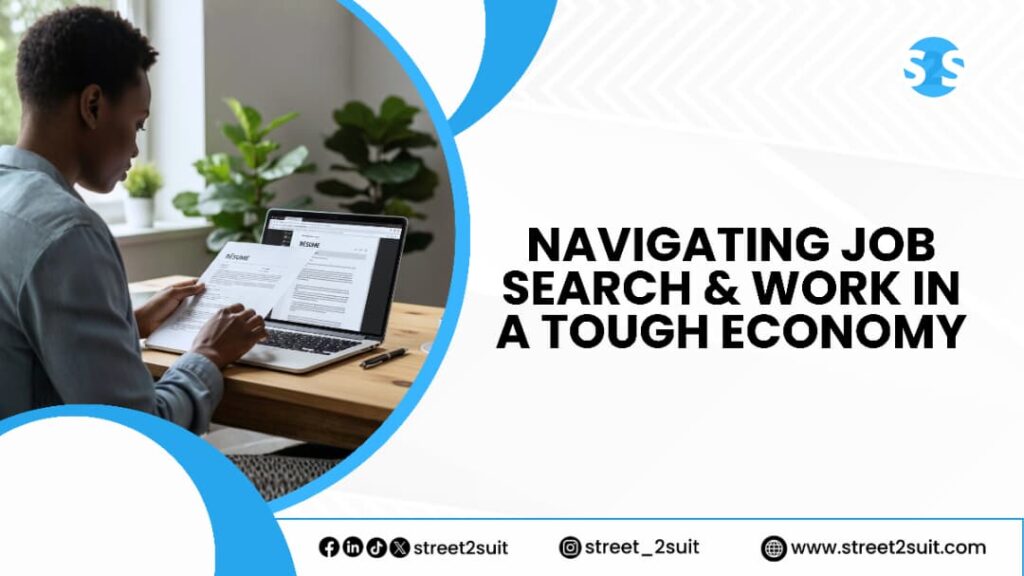
If the economy had a mood ring right now, it would be flashing “uncertain” with a side of “good luck out there.”
Inflation is doing its thing, companies are having layoffs, and job postings somehow demand five years of experience in software that’s only existed for three. Welcome to the modern job market.
Searching for a job or even just surviving at work during a tough economy can feel like trying to board a moving train while carrying your self-esteem, rent money, and LinkedIn profile all at once. The good news? You’re not alone, you’re not imagining it, and there are smarter ways to navigate this chaos without losing your mind.
The Job Market Reality Check
Let’s start with honesty. In a tight economy, companies become cautious. Hiring slows, budgets shrink, and employers suddenly want unicorn candidates who can do three jobs for the price of one. This isn’t because you’re underqualified, it’s because businesses are hedging their bets.
Recruiters are overwhelmed, automated systems filter resumes before human eyes ever see them, and job seekers are competing globally, not just locally. If you’ve sent out 50 applications and heard nothing but silence, congratulations you are having a very normal experience.
The mistake many people make is assuming this silence equals failure. In reality, it often means your resume never made it past software designed to scan keywords at lightning speed while showing zero appreciation for your personality.
Rethinking the Job Search Strategy
In a tough economy, the “spray and pray” approach applying everywhere and hoping something sticks rarely works. Precision beats volume.
Instead of applying to 20 random roles a week, focus on 5–7 positions where your skills genuinely align. Tailor your resume just enough to reflect the language of the job description. No, this isn’t lying, it’s translating your experience into a dialect recruiters understand.
Networking also stops being optional. This doesn’t mean awkwardly messaging strangers with “Hope you’re well!” followed by a job request. It means reconnecting with former colleagues, joining industry-specific communities, and having actual conversations. Many roles are filled before they’re ever posted, especially in uncertain times.
Think of networking less as self-promotion and more as professional friendship-building. People help people they remember and like.
Skills Are the New Job Security
When job stability is shaky, skills become your safety net. The good news? You don’t need to learn everything. The better move is learning adjacent skills that complement what you already do.
If you’re in marketing, understanding data analytics helps. If you’re in tech, communication and project management suddenly make you more valuable. If you’re in almost any field, being comfortable with digital tools is no longer a bonus, it’s expected.
Employers in tough economies hire people who can adapt. Showing that you’re learning, even informally through courses or projects, signals resilience. And resilience is very attractive when companies are unsure what next quarter looks like.
Working While Everyone’s on Edge
If you’re already employed, a tough economy brings a different kind of stress: heavier workloads, fewer raises, and the looming fear of layoffs. Suddenly, everyone is “circling back” and “aligning priorities,” which usually means doing more with less.
This is where visibility matters. Not performative busyness, but clear communication. Make your contributions known without becoming that person who carbon copy the entire company on every email. Share progress, ask smart questions, and document your work. In uncertain times, being quietly competent isn’t always enough, you have to be noticeably reliable.
At the same time, boundaries are not luxuries. Burnout helps no one, especially not companies trying to survive. The economy being rough does not mean you need to sacrifice your health to prove loyalty.
The Mental Game (The Part No One Talks About)
Job searching in a tough economy messes with your head. Rejection feels personal, confidence dips, and comparison becomes a sport you never signed up for.
Here’s the uncomfortable truth: the market is not a reflection of your worth. Timing, budgets, and internal politics play a bigger role than talent alone. Separating your identity from your employment status is not easy but it’s necessary.
Structure helps. Treat job searching like a job with set hours. Take breaks. Step away from LinkedIn before you start questioning every life choice you’ve ever made. A rested mind performs better than an exhausted one constantly refreshing inboxes.
And yes, laughing at something’s helps. If you can’t laugh at job descriptions asking for “rockstars” willing to work weekends for “competitive pay” (which is never competitive), you’ll cry and crying is harder to schedule.
Conclusion
A tough economy doesn’t last forever, but careers do. This is the time to think strategically, not just urgently. Temporary roles, contract work, freelancing, or lateral moves can keep momentum going while opening unexpected doors.
Some of the most successful careers are built during downturns not because conditions were ideal, but because people adapted. They learned, pivoted, and stayed visible.
If nothing else, remember this: struggling in a difficult economy doesn’t mean you’re failing. It means you’re living in reality.
And while the job market may be tough, you’re tougher especially now that you know how to navigate it with clarity and strategies to keep your sanity intact.
Receive the latest job and career updates in your inbox, every week!