
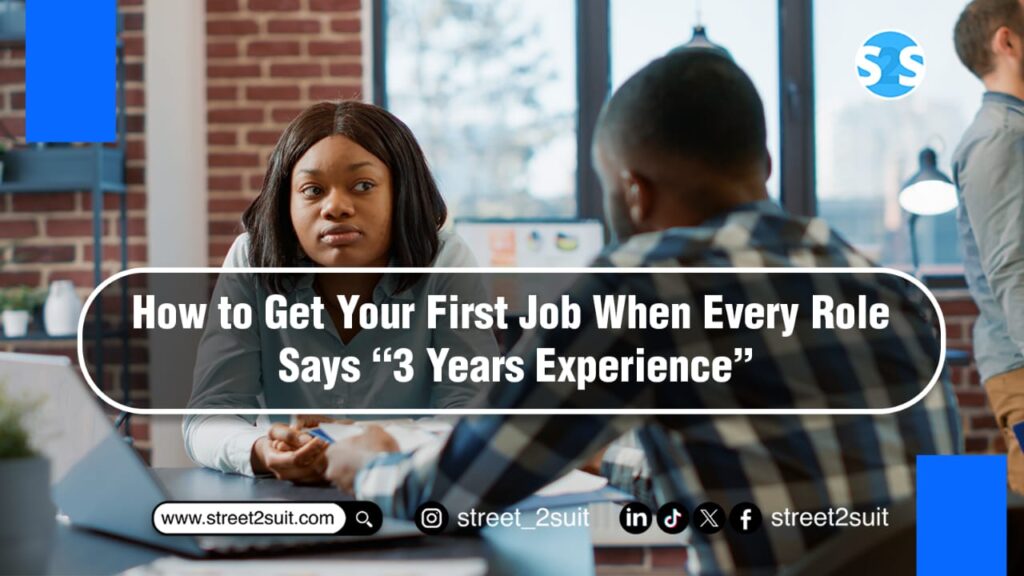
Interviewer: So, tell me about your experience.
Zainab: I recently graduated, but during school I worked on projects, volunteered, and…
Interviewer: (cuts in slightly) Yes, I saw that… but this role requires at least three years of experience.
Zainab: I understand, but I’m a fast learner and I’ve handled similar tasks during my internship and… I am willing to learn.
Interviewer: The thing is, we need someone who can start immediately without much supervision.
Zainab: (pauses, forcing a small smile) Okay… Thank you for your time.
Interviewer: We’ll get back to you.
Two weeks later.
“We regret to inform you that you were not selected for this role.”
Zainab drops her phone on the bed and stares at the ceiling. Not angry. Not surprised. Just… tired, because it’s the same story every time.
That is the reality many people are living in quietly, repeatedly, and frustratingly. There’s a certain kind of frustration that comes with job hunting as a beginner. It’s not just rejection, it’s the feeling of being locked out before you even begin.
You open a job listing, hopeful.
- Entry-level role.
- Minimum of 3 years experience required.
You pause. Three years… for a role meant for beginners?
At that moment, it starts to feel like the system is playing a joke you’re not in on. Because how exactly are you supposed to get experience if no one is willing to give you a chance?
This is the quiet reality many graduates and early-career job seekers face. And if you’re in that space right now, you’re not alone and more importantly, you’re not stuck.
First, Understand What Employers Really Mean by “Experience”
When employers write “3 years experience,” they’re not always asking for three literal years of formal employment.
What they often mean is:
- Familiarity with the role
- Ability to work with minimal supervision
- Evidence that you’ve applied relevant skills before
The problem is not always lack of experience, it’s lack of visible experience.
There’s a difference.
You may not have worked in a formal office for three years, but that doesn’t mean you have nothing to show.
Your Experience Is Bigger Than Your Job Title
Many job seekers limit “experience” to paid roles. That’s where the disadvantage begins.
Experience can come from:
- Internships
- Volunteer work
- School projects
- Freelance gigs
- Personal projects
- Running a small business
- Assisting someone informally
If you’ve ever:
- Managed social media for a friend’s business
- Helped organize an event
- Written content
- Handled customer interactions
- Solved real problems
You have experience.
The issue is not having it, it’s how you present it.
Learn to Translate What You’ve Done
Employers don’t just look at what you did. They look at how it relates to the role.
For example:
Instead of saying:
- I helped my friend with her business.
Say:
- Managed customer inquiries and coordinated daily operations for a small business, improving response time and customer satisfaction.
Same experience. Different impact.
Your job is to connect your past activities to the employer’s needs.
Apply Anyway Even When You Don’t Meet All Requirements
This is where many people disqualify themselves too early.
Job descriptions are often written as “ideal wish lists,” not strict requirements.
If you meet 50–70% of the criteria, you are still a valid candidate.
Waiting until you’re “perfectly qualified” can keep you stuck indefinitely.
Let the employer decide if you’re a fit, don’t reject yourself first.
Build Experience While You’re Waiting
Instead of waiting for someone to give you experience, start creating it.
You can:
- Take on small freelance tasks
- Volunteer for roles related to your field
- Build a portfolio
- Work on real-life projects
- Offer your skills at a beginner-friendly rate
This does two things:
- It builds confidence
- It gives you proof of ability
Employers trust what they can see.
Network And Redefine What That Means
You don’t need to walk into crowded rooms introducing yourself to strangers.
Networking can be:
- Reaching out to someone on LinkedIn
- Asking for advice, not a job
- Having one-on-one conversations
- Following up with people you already know
Opportunities often come from people, not just applications.
A single referral can bypass the “3 years experience” filter completely.
Fix How You Show Up (This Matters More Than You Think)
Sometimes, the barrier is not your experience, it’s how you present it.
Ask yourself:
- Is my CV clear and tailored to the role?
- Do I highlight results or just responsibilities?
- Does my cover letter show effort or is it generic?
Many candidates have similar backgrounds. Presentation is what separates you.
Prepare for Interviews Like You Already Belong
When you finally get an interview, self-doubt often creeps in:
- What if they realize I don’t have enough experience?
That mindset shows in your tone, your posture, and in your answers.
Instead, focus on:
- What you can do
- What you’ve learned
- How quickly you adapt
Confidence doesn’t come from having everything, it comes from understanding what you bring.
Be Careful of Environments That Don’t Support Growth
Let’s go back to the opening story… Study how the Interviewer often cut Zainab short, you might not have noticed, but she already lost her confidence.
As you search for your first job, don’t just focus on getting hired. Pay attention to the environment, the attitude… pay attention.
A good workplace:
- Corrects without humiliating
- Teaches without belittling
- Supports growth, especially for beginners
Your first job will shape your confidence more than your salary. Choose carefully.
Rejection Is Part of the Process Not a Verdict
- You will apply.
- You will get ignored.
- You will get rejected.
It’s not a sign that you’re not good enough, it’s part of the process.
Be informed:
- Every application improves your clarity.
- Every interview improves your confidence.
- Every “NO” moves you closer to a “YES.”
Conclusion
The “3 years experience” barrier is real, but it’s not unbeatable.
You don’t break it by waiting, you break it by:
- Reframing your experience
- Showing your value clearly
- Taking initiative
- Applying strategically
- Building while you wait
You may not have three years on paper, but you can have enough proof to be trusted.
And sometimes, all it takes is one person willing to look beyond the requirement and see potential.
Make sure, when that moment comes, you’re ready.
Receive the latest job and career updates in your inbox, every week!