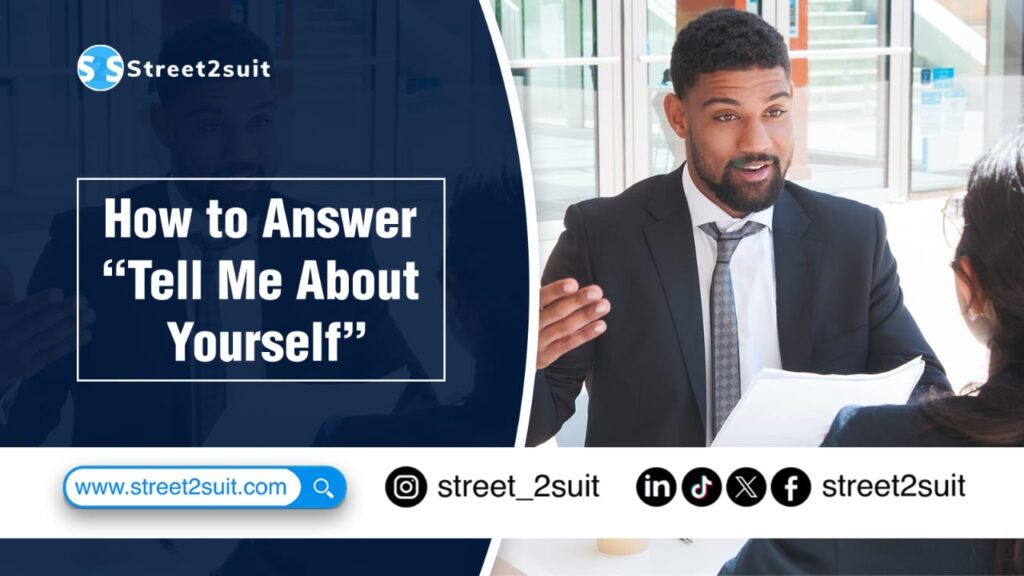
Kay sat in the waiting area, staring at her CV like it might suddenly start whispering answers to her.
She had prepared for everything. She knew the company, the role, even the interviewer’s name. But there was one question she couldn’t shake off:
“Tell me about yourself.”
It sounded harmless but Kay had seen it ruin interviews before. People either turned it into a life story or froze like someone had just asked them to solve a math equation in their head.
“Next, please.”
Her name was called.
She stood up, took a deep breath, and walked into the room.
The Question That Starts Everything
After a few pleasantries, the interviewer smiled and said:
“So, Kay… tell me about yourself.”
There it was.
Kay’s brain did what most brains do in that moment. It opened twenty tabs at once.
Should she start from school? Her internship? Her last job? Her hobbies? Her love for fried rice?
She almost said, “Well, my name is Kay…”
Then she remembered something she had practiced the night before.
This question is not about your life story, it is about your professional story.
What the Interviewer Actually Wants
As Kay sat there, she reminded herself:
The interviewer is not asking for everything. They are listening for a few key things:
- What you do now
- What you’ve done before
- What you’re good at
- Why you’re here
That’s it.
Not your childhood, not your secondary school awards, not your favorite color, just the story that makes you a strong candidate.
Kay’s Answer
Instead of panicking, Kay followed a simple flow she had practiced:
1. Start with the Present
She began calmly:
“I’m currently working as a customer service assistant, where I handle customer inquiries and help resolve issues.”
Simple. Clear. No drama.
2. Move to the Past
She continued:
“Before that, I worked as a sales intern, where I developed strong communication skills and learned how to engage with customers effectively.”
Now the interviewer understood her background.
3. Highlight Her Strengths
She added:
“I’ve become particularly good at building rapport with customers and staying calm under pressure, especially when handling difficult conversations.”
Now she wasn’t just listing jobs. She was showing value.
4. Connect to the Future
And finally, she said:
“I’m now looking to move into a role where I can use those communication skills in a more sales-focused environment, which is why I’m really interested in this opportunity.”
And just like that, her answer had a direction.
What Made Kay’s Answer Work
Kay didn’t say anything extraordinary. She didn’t use big grammar or fancy words.
But her answer worked because it was structured, relevant, concise, and connected to the role. Most importantly, she sounded like a human being, not a rehearsed script.
What Kay Almost Did Wrong
After the interview, Kay laughed at herself. Because just minutes earlier, she had almost started from her childhood. Listed every job she had ever done, used phrases like “I’m very hardworking and passionate” without proof , and spoken for five minutes straight without direction. These are the mistakes that quietly hurt candidates.
Common Mistakes
Turning It Into Your Life Story
The interviewer did not ask for a documentary. Keep it professional and focused.
Talking Without Structure
Jumping from one idea to another confuses the listener, follow a simple flow.
Being Too Generic
“I’m hardworking” is not convincing unless you show it through experience.
Forgetting the Role
If your answer doesn’t connect to the job, it misses the point.
How You Can Build Your Own Answer
After her interview, Kay shared her “formula” with her friend.
“Just think of it as a short story with four parts.”
Fill This In
- Present: What are you doing now?
- Past: What relevant experience do you have?
- Strengths: What are you good at?
- Future: Why are you here?
When you combine these, you get a strong answer.
If Kay had to say it again, she might refine it like this:
“I’m currently a customer service assistant with experience handling customer inquiries and resolving issues. Before that, I worked as a sales intern, where I developed strong communication and persuasion skills. I’m particularly good at building rapport and managing difficult conversations calmly. I’m now looking to transition into a telesales role where I can use these skills to contribute to a results-driven team.”
Short. Clear. Effective.
Confidence Comes From Clarity
As Kay left the building, she realized something important. She didn’t feel confident because she memorized an answer. She felt confident because she understood what the question was asking. Once you understand that, the fear reduces.
Conclusion
“Tell me about yourself” is not a trap. It is an opportunity to guide the interviewer’s first impression of you. Like Kay, you don’t need to be perfect. You just need to be clear.
Tell a simple, professional story:
- Where you are now
- Where you’ve been
- What you’re good at
- Where you’re going
When that question comes, you won’t freeze, you’ll know exactly what to say. And no, you still don’t need to start with “My name is…” They already know. So, go ace that interview and get that job!

Mariam is an imaginative and meticulous writer who is passionate about crafting compelling narratives and translating concepts into influential content.